
Cumberland County Owner Record
The Cumberland County PVA keeps the assessment roll. Its parcel card is the practical place to check who is listed now, because it joins an owner name to a parcel number and assessment data. The card is an index aid. It is not a legal document, so read the whole record and note the date you viewed it.
| Owner name | The assessment owner exactly as displayed, which may be a person, estate, trust, or entity |
|---|---|
| Mailing address | The destination for notices, not proof that the owner occupies the parcel |
| Location | The PVA site or road label, which can differ from the mailing address |
| Parcel and account | The key identifiers used to keep the search tied to the right land |
| Last sale | A transaction lead that may show date, parties, price, and book-page reference |
| Description and class | Assessment labels that help distinguish parcels but do not replace the deed |
The label means owner of record for assessment purposes. Do not relabel it as an occupant, resident, taxpayer, or guaranteed title holder, because those terms answer different questions.
Check Cumberland's Current Owner
Start at the Schneider qPublic or Beacon enterprise entry. Select Kentucky, then the Cumberland County PVA application. Search an address, owner, parcel ID, or alternate ID. The county publishes no stable direct application URL. The vendor surface may offer account, subscription, or metered access options, so confirm the current terms there.
A result can include the parcel number, account, location, description, class, tax district, primary owner, mailing address, land and improvement panels, sales, photos, and notices. An official Kentucky Public Service Commission exhibit illustrates that same card form. It proves nothing about present facts for any parcel. Ownership still requires a fresh lookup. The enterprise page also shows why the state and county selections matter before you rely on a result.
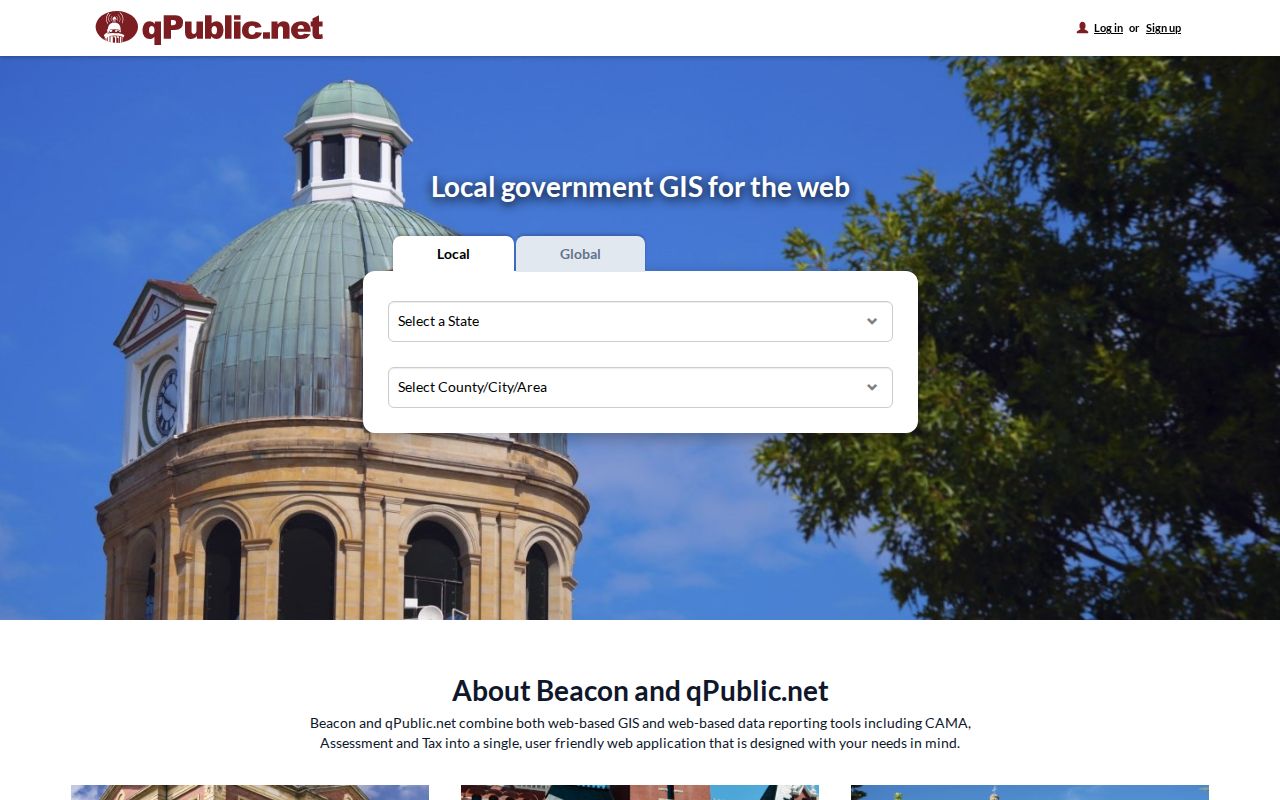
Before copying any owner name, check the next screen for the Cumberland County PVA identity, the source date, and a parcel match. Those three checks keep the lookup honest.
How Current Cumberland Owners Are
The PVA publishes no fixed refresh schedule. Nor is there a set number of days between a closing and an update to the assessment roll. That gap should never be guessed. Assessment systems change after a deed, a parcel split, a combine, a correction, or new construction. A recently recorded deed can therefore be newer than the assessment owner field.
Keep three dates separate. One is the day the deed was signed. Another is the day the county clerk recorded it. The third is the day you viewed the PVA record, which is the only date fully under your control. If a sale is new or the names conflict, call the PVA at 270-864-5161 and ask which assessment year or update the card reflects. Then rely on the clerk's latest instrument.
Treat a PVA sales row as a lead, not a final answer on the current owner. An official Kentucky Public Service Commission exhibit shows a sample card carrying an old sale date, a price as displayed, named grantor and grantee, and a book-page reference. Those fields are good for locating the deed. They cannot show that the row is complete, that the price reflects market value, or that no later conveyance exists. Check the clerk index for later instruments before naming the present owner.
Parcel changes create a second kind of lag. A parent tract may hold the useful deed and sale history while a newer child parcel carries only a few rows. Ask the PVA for the prior parcel number, the split or merge date, and the assessment year. Keep both identifiers. The legal description in the newest deed or plat must bridge the old tract to the present parcel. A matching street label alone is too weak.
Recent-sale check. The Cumberland County roll can trail a recorded transfer. The newest matching deed is the stronger public-record clue to the current owner.
Confirm Cumberland's Current Owner
Confirming current ownership is a short present-tense check. It is not a long ownership-history project. Use the PVA identity to find the most recent clerk record, then test whether both describe the same parcel. A book and page taken from a parcel sales row makes a strong bridge, because it avoids a broad name-only search.
- Save the PVA parcel ID, account, owner name, location, mailing field, sales reference, and date viewed.
- Open the Cumberland recorded-document portal, or ask the clerk to locate the latest deed by book-page and grantee.
- Read the newest deed's grantee and full legal description. Confirm that it concerns the same tract, not merely a person with the same name.
- Check for a later corrective or court-authorized deed. Ask the PVA about any unmatched recent update.
- Owner of record
- The party shown in a stated official record as of its update date.
- Assessment roll
- The PVA parcel and value record used for property-tax administration.
- Situs
- The property-location field, distinct from the notice mailing address.
- Recording lag
- The time between a conveyance and an update in another public system.
Cumberland Owner Address Quirks
One qPublic card in an official Kentucky Public Service Commission exhibit carries the location label "HENDRICKS CREEK RD 0." Zero street numbers are a database convention for a rural road or tract, not proof that the parcel lacks land, an address, or a current owner. A second sample shows a Cherry Tree Road location. Its mailing address sits on Hendricks Creek Road. Mismatches like that are routine. They are why a Cumberland County owner record must keep location and mailing fields separate. Join your sources by parcel ID and deed description. For an address-point problem, the county E-911 mapping contact is the proper route. USPS only standardizes delivery text.
Note: Preserve leading zeros, hyphens, and decimal suffixes in Cumberland parcel IDs, because a small format change can break a cross-system match.
Cumberland Entity Owners
The owner of record on a Cumberland County property card is not always a person. It may be a corporation, an LLC, a trust, or an estate. Copy the legal name letter for letter. For a company, the Kentucky Business Entity Search shows its entity ID, status, type, registered office, and filed documents. Search suffix and punctuation variants too. Include inactive entities. An older deed may carry an older name.
A registered agent or principal office proves nothing about who occupies a Cumberland County parcel. A business filing never replaces the deed itself. Trusts often lack any public business profile. An estate label may appear on the PVA card. Compare the newest deed and, where it matters, the local probate file. What matters is identity control. Match the exact entity name, parcel ID, deed book and page, legal description, and date. Never merge property records on a similar name.
Cumberland PVA Record Cycle
Under Kentucky assessment guidance, real property is revalued every year and each parcel is physically examined at least once every four years. That statewide cycle frames any Cumberland County card. It does not guarantee the online result shows an inspection date or refresh history.
The PVA can explain an assessment year, parcel splits or combines, prior parcel numbers, and field corrections. The office sits at 600 Courthouse Square in Burkesville, with mail to P.O. Box 431, Burkesville, KY 42717. The state directory lists 270-864-5161, fax 270-864-1471, and GinaL.Watson@ky.gov. Verify hours before a visit.
A good request names the parcel. Ask the office to confirm the current account identifiers, assessment owner, mailing and location fields, class, tax district, assessment year, and any parent-parcel history. Calling it an information check matters. It does not start or extend a valuation appeal. If the PVA corrects a field, save the response and its effective date, because the clerk, tax, E-911, and USPS systems may not update at once.
Use Cumberland Owner Data Lawfully
A public mailing field can support a focused notice about a boundary or an easement. It can also support a purchase inquiry or another parcel matter. It shows nothing about occupancy. Copy no more personal detail than the land question requires. Kentucky's Safe at Home program can affect how protected addresses are handled. The KRS 61.878 privacy exemptions can affect them too.
A PVA owner name, mailing address, tax-list entry, or USPS label is not automatic proof of title. It also proves nothing about residence, delinquency, or vacancy. Verify the source and its date. Where legal rights turn on the answer, get the recorded instrument and professional title help. The broader route sits on the Cumberland County ownership lookup page.
Lawful use. Use a Cumberland County owner of record for a valid parcel question. Never use owner information to stalk, harass, intimidate, or harm anyone.