
Identify a Cumberland Property Owner
Start with the street address. Pull the PVA card. Read its owner and parcel identity. A sale reference on that card leads to the newest county deed, which names the recorded grantee for the tract. Do not stop at the first name you see; note when each source was updated and whether the deed affects the full parcel.
- Search the known address at the qPublic/Beacon entry after selecting Kentucky and Cumberland County PVA.
- Copy the owner name, parcel/account, location, mailing field, and any sale book/page.
- Use that book/page or owner name at the County Clerk's recorded-land system.
- Read the latest deed's grantee and legal description, then check later corrective instruments.
- If an entity appears, verify its exact name and status in the Kentucky Secretary of State business search.
It returns the assessment owner and grantee, not occupants.
Cumberland Ownership Source Trail
Several Cumberland records show ownership, but each answers a different question. The PVA roll is the quick current assessment source. A deed is different, because it is the recorded transfer itself. Maps may repeat assessment data. An entity filing identifies a business record rather than the tract.
| Where ownership appears | What it gives | How current |
|---|---|---|
| PVA assessment roll | Owner field, mailing, parcel identity | Can lag a recent deed |
| County Clerk deed | Grantee and described land | Current through recording date |
| Parcel map/card | Mapped tax parcel and linked owner field | Depends on PVA refresh |
| SOS business record | Entity status and registered-office clues | Not land-title evidence |
Bridge sources by parcel ID or book and page.
Read the Cumberland Owner Field
An official qPublic card shows the owner of record at a glance. It lists a primary owner and mailing address. The same card carries the parcel number, account, location, description, class, tax district, and sales rows. It also carries a warning against use on legal documents. Treat the owner field as a practical lead, not a title certificate.
The PVA entry screen is the official vendor route for Cumberland County property records.
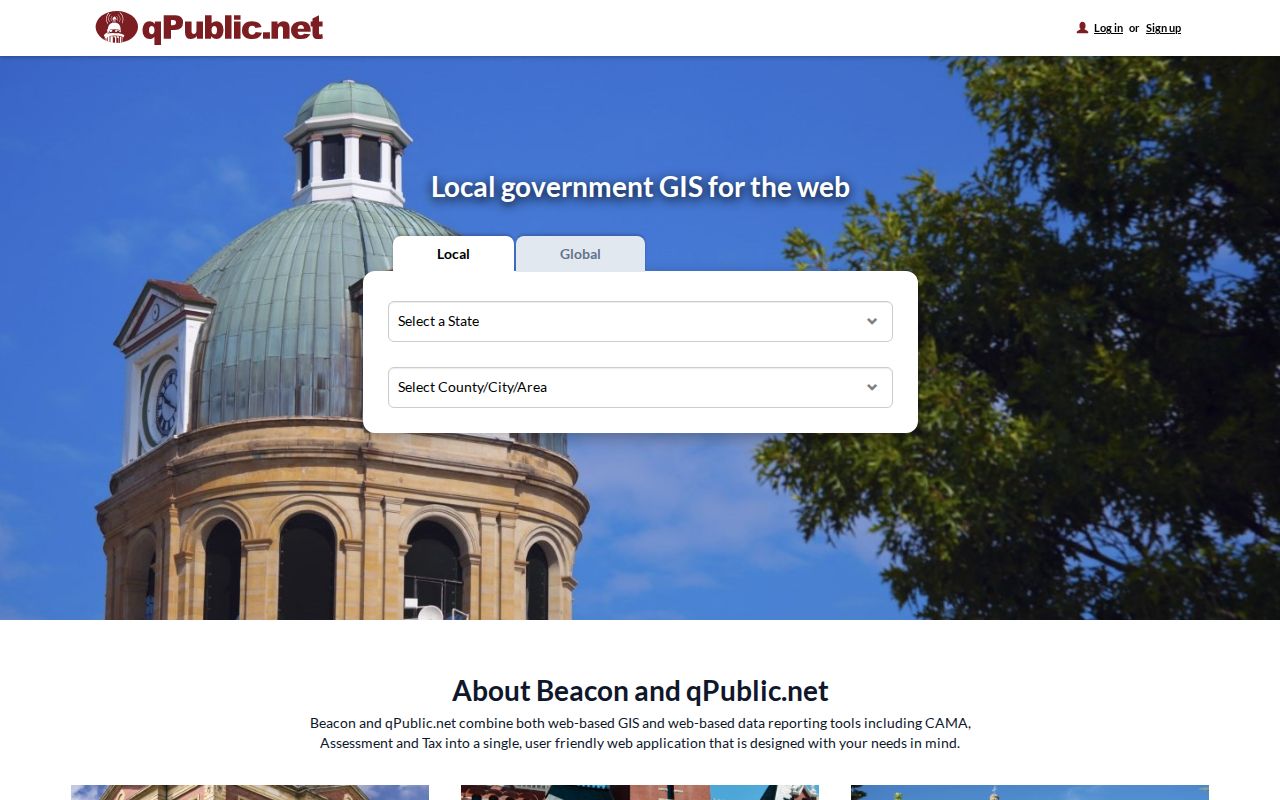
The screen shows how an owner search begins. The county publishes no direct live result path, so the PVA office remains the fallback for confirming who owns a property in Cumberland County.
Confirm Cumberland Deed Grantees
The Cumberland County Clerk records and indexes deeds, mortgages, easements, liens, lis pendens, and plats. Its recording page assigns book/page numbers and scans documents into the county system. Search the assessment owner as grantee. A sale row may give a book and page. Use that exact reference before any broad name query.
The clerk recording page is also the fallback. The Courthouse Computer Systems gate blocks anonymous access. Call 270-864-3726 or visit 601 Courthouse Square. Ask for an index inspection or a deed image. Read the full legal description, because one deed may convey only part of a tract or several tracts at once.
Cumberland Entity Owners
An LLC, corporation, trust, or estate can appear as the owner of record. Keep the name exactly as written. For a business, search the Kentucky business entity database. Include inactive entities, name variants, and corporate suffixes. A registered office or agent is just a business filing detail. It does not prove the business occupies or owns a certain parcel.
Trust records may name only a trustee. Estate ownership can linger on the PVA tax roll. Probate or a later deed may still be pending. Confirm any transfer in the clerk's deed records. The chain of title may depend on an estate order. Request the Cumberland court file, then look for a recorded deed of distribution or other conveyance in the property records.
Mailing Is Not Cumberland Occupancy
Cumberland County records answer several different questions at once. The PVA location field, the mailing address, the E-911 address, USPS delivery data, and the deed description each carry their own meaning. None of them alone settles occupancy.
One PSC example matched a Cherry Tree Road parcel location with a different mailing address. Another listed "HENDRICKS CREEK RD 0." Neither pattern proves where a named owner actually lives.
- Owner of record
- The name maintained on the assessment roll.
- Grantee
- The party receiving an interest in a recorded deed.
- Situs
- The property's location label, not the notice address.
- Title
- The legal ownership interest, which no single index guarantees.
This separation keeps “who owns” from turning into an unsupported claim about residence.
Recent Cumberland Transfers
A newly recorded sale can reach the PVA roll late. The assessment owner and the deed grantee may differ. Compare execution and recording dates on the deed, the land description, and any later corrective filing. A recent Cumberland County transfer may also be partial. It could involve a parent parcel, a new child parcel, or a simple name change.
The newest recorded deed is the stronger lead for the conveyed interest. Recording alone, though, does not clear every prior claim. Some decisions call for full title work. Check mortgages, releases, liens, assignments, and court notices. For a focused present-owner review, the site's current owner record route explains the roll-to-deed check.
Owner Privacy in Cumberland
Kentucky property records remain subject to KRS 61.878 exemptions and address-protection rules. Safe at Home gives qualifying participants a substitute address for many public records. The state compliance page, however, treats real-estate holdings separately. So do not assume a protected participant's land address is hidden. Do not assume a mailing address marks a present residence either.
Keep the owner lookup tied to a property records question. That means a parcel, deed, boundary, purchase, estate, tax bill, or civic matter. Never build a list of all owners or residents. Skip protected details that do not answer the question at hand, and request a segregated release when only part of a public record is exempt.
Limits of Cumberland Owner Lookups
A who owns search has real limits. It can surface the PVA owner field and the deed grantee. That is where certainty ends. The lookup cannot tell you who occupies the property. It also cannot tell you whether a private agreement exists or whether every interest has been released. It cannot show where an owner lives today. A tax-list row, a USPS city name, a registered business office, and a map label are not title evidence.
For real stakes, go deeper. When a purchase, lien, inheritance, or boundary decision turns on ownership, use a certified instrument or a professional title search. And for an owner who has held the parcel for decades, follow the prior book and page trail instead of treating the current card as a full history.
Lawful use. Cumberland owner records support due diligence and land research. Never use names or addresses to stalk, harass, intimidate, or harm anyone.
Cumberland Owner Record Conflicts
Two different owner names can both be right. The Cumberland PVA may still list the assessment owner. But a recently recorded deed names a new grantee. A trust may appear only through its trustee. An estate can stay on the tax roll until administration catches up. A company may record under a former legal name. Parcel splits can leave the old sale trail attached to a parent parcel.
Work the conflict by comparing dates and land descriptions. Start with the newest deed. Check whether it covers the full tract, and whether a corrective instrument came after it. Ask the PVA for the assessment year plus any split, merge, or parent-parcel note. For an entity, pull the Secretary of State record and look for predecessor names. For an estate, connect the probate order to a recorded conveyance.
Never just take whichever name looks newest on a search screen. Write down why each source differs. That short reconciliation beats a bare answer. This matters most when the land sits on an old road, a lake edge, or a dated tract description.
When the owner cannot be identified online, work the office routes in order. Ask the PVA to confirm the current parcel, account, and assessment owner. Ask the County Clerk for instruments indexed to that name or book and page. If a business name appears, add its Secretary of State entity ID and predecessor names. If an estate or court order shows up, get the case number. Pull the local file too. Each request should state the parcel, address, name, date range, and preferred format.
A failed web query proves nothing. Cumberland County may still hold the record. The spelling may differ. The land may sit under a parent parcel. The instrument may sit in an older book, or a portal gate may limit access. Keep the failed URL and its date. Then use the clerk's counter, phone, mail, or the Kentucky open-records route. If an office does not keep the item, ask for the proper custodian.
Always attach a source date to the owner answer. Say whether the name came from the Cumberland PVA roll. It may instead come from the latest deed inspected, or an entity record. That label lets a later reader repeat the work and catch a newer transfer.